
I see many ladies in hormonal chaos and menopause and often they experience gut issues as well as all the other symptoms associated with hormone imbalances. I have been asked many times, can menopause cause constipation? Because during the peri years, we experiencing a slow drop in hormones, they fluctuate up and down and slowly decline.
Estrogen receptors are present in the mucous membrane of the stomach and small intestines. Fluctuations in progesterone and estrogens could be to blame for constipation as the hormones can inhibit the muscular movement in various sites of the digestive tract.
Helpful habits to counter these symptoms are:
Activity and getting up in time for the signals to start – waking cortisol helps with the first bowel movement, sitting around in bed will blunt the effects
Drinking plenty of fluids – not just water, soups, herbal teas, ginger tea
Eat a fibre rich diet; flaxseeds, chia seeds, wholegrain, nuts, pulses and fruit like figs, blueberries and apples
Improve your pelvic floor muscles – Pilates is brilliant
Find a pre and probiotic that supports you
Epsom salt baths
Chew your food really well
Eat 3 regular meals per day
Abdominal massage with lavender before bed – massage right to left (your right and left)
We have linked constipation with worse night sweats, hot flushes, sleep disturbances, cravings and mood swings, so keeping the gut healthy, moving and in balance, with the ground work above is the basis of getting this improved. There can be other causes of gut issues, if you have already incorporated these habits and you are still struggling book your free discovery call and we can discuss options for working together. It is also important to discuss any changes in bowel habits with your Doctor.
Share this:

Many of us have been actively supporting our immune systems to protect agains COVID 19 infections, by eating a healthy diet full of a variation of proteins and vegetables, using resistant starch and fermented foods for gut health. Keeping hydrated and getting out in the sunshine for vitamin D and supplementing with Zinc and other vitamins. However it has been noted that Zinc is being over used, primarily as a way to boost immunity and avoid COVID infection.
So what are the real dangers of supplementation with minerals. Iron for example is lost through sweat and skin sloughing as well as bleeding. So a constant supply is helpful, too much iron is not helpful as the body has no way to remove unwanted or too much iron and it then lands in tissues, not our cells. We need copper to ensure proper absorption of iron into our cells. Vitamin A and C are also required for proper iron absorption. I do tend to give a mineral complex rather than individual minerals and I hope that I make it clear how long it is needed to be taken for. Long term Zinc supplementation is not recommended.
Zinc is important for healthy skin, immune function and blood sugar, neurotransmitters and fertility. Too much zinc is unhelpful as in large amounts and for long periods of time and can dangerously lower our copper levels.
We need copper to ensure we can use iron appropriately, by that I mean we can’t get iron into our cells without copper. Which could create an issue of low cell iron, but high tissue iron, which is not desirable and can be dangerous.
I would therefore suggest that if you have been taking zinc of 8mg or more per day for more than 3 months without copper, that you stop and begin eating more of the following foods, or use a copper water bottle.
Copper is found in the following foods:
Shitake mushrooms
Swiss chard
Spirulina
Sesame seeds
Cashew nuts
Dark Chocolate
Beef liver
Lobster
Oysters – but these are also high in zinc and could challenge copper absorption
Should you wish to get some personalised support please book in for a free confidential discovery
Share this:


Winter is a time to slow down and conserve energy, but who actually does? We are given all the signs, like shorter days, darkness, colder and wetter weather. But due to busy lifestyles and work we keep going. This can have a negative impact on our health and our kidney energy, as this is time slow down.
Supporting our kidneys with foods such as nettles, dandelion, root vegetables like carrots, beetroot and swede, are thought to be supportive according to Chinese medicine. They are also good for our gut health too as they provide fibre and hydration.
Finding ways to slow down and taking time out, by having 30mins spent on your own, or having a relaxing bath before bed or before your day starts, saying no to commitments or work, setting boundaries. What could you do to create a little calm and space for yourself, in realistic terms?
Food to support you during winter
A generally rule of thumb is to include mostly warm and cooked foods, and limit cold and raw foods. Use warming spices like garlic, ginger, nutmeg and cardamom.
Mostly we are drawn to these foods as the colder darker days draw in, and I certainly crave them for comfort. Stews, soups, risottos and toasted sandwiches are staples in my house.
If your kidney energy is out of balance you may experience symptoms like headaches, ear issues, lower back issues, inner knee issues, bladder problems or foot problems. The kidney meridian follows a line from the top of your head, ears, neck down to the kidney, bladder inner thigh, knee all the way down to the big toes. Perhaps gout is more a kidney issue than anything else? But any of these areas can be linked to poor kidney energy. In functional medicine or nutrition, which is what I practice, we would consider these symptoms as adrenal dysregulation and we could be working on improving symptoms like tinnitus, vertigo, headaches and injuries by supporting the adrenal glands, which coincidentally sit onto of the kidneys. Focusing on a diet to support kidney energy is not dissimilar to supporting adrenal health using functional medicine. Its all about finding balance and calm.
Here’s how we support the adrenals/kidney energy
Managing stress is key. Stress will imbalance minerals like sodium and potassium, which we need for hydration (kidneys)
Mineral rich diet using seafood, root vegetables and warming spices and herbs, all good at improving mineral balance and hydration
Sleep, improving a restful sleep by keeping blood sugar levels more even during the day, protein is key for keeping our bodies balanced.
Bedtime snack: Oatcake with almond butter and homemade cherry chia jam, with a small shot of bedtime tea with valerian.
Share this:

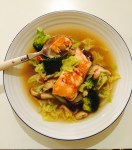
Miso veggie pot – for a super quick lunch time
This simple recipe is fast, easy and tasty!
- Raw miso paste,1 teapsoon
- Half red onion – in 3rds
- Half courgette – sliced in lengths like matchsticks
- Half red pepper – diced
- Seaweed sprinkles
- ¼ Chinese cabbage very thinly sliced (you can add broccoli too sliced)
- Large handful shitake mushrooms – roughly chopped
- Garlic glove sliced
- ½ inch of ginger root thinly sliced or grated
- ½ red chilli thinly sliced
- Last nights baked salmon fillet (or a ready cooked version)
- Sesame seeds
Serves 1 person (easy to increase it to serve more people)
First put the kettle on
Using a wok or frying pan, stir fry the vegetables in a little olive oil on a high heat for 5 minutes or until they are to your liking.
Add 1 teaspoon of miso paste to a bowl – leave to one side
Pour 150ml of boiled water on the miso and stir in until it dissolves
Add the stir fried veggies to the miso soup and place the salmon on top and sprinkle the sesame seeds and the seaweed. Serve.
You can also use some heated bone broth and add this instead of water to the miso paste. No salmon? Use smoked mackerel or some veggie burgers like the Biona do great vegan burgers.
Share this:

Many moons ago, whilst I was visiting a Yoga ashram in Australia, I had a yogi do teachings with me daily about the benefits and importance of regularity.
I wasn’t quite sure how relevant the teachings were at the time and it sounded quite dull, doing the same things each day to gain structure and clarity (I was younger then!). I was keen to try it, but adventure and other emotional stuff was standing in my way. 15 years later, I think I understand the teachings. Do you find that you can’t hear or understand something until you need to do it? It’s funny how it stayed with me. The benefits of regularity are peace, calm and a self affirming love that comes from doing these things for ourselves, an important practice for those who are givers, carers and those who work one to one with people needing help and for those with anxiety and depression.
In my practice during the COVID challenge, with the teaching from the Ashram, I recommend my clients create a morning routine that works for them. This is more important than ever since COVID-19 landed on our shores. Our previous routine has been taken away and replaced with isolation and spending a lot of time at home and without the daily routine we had got so used to.
A morning structure or routine, provides a framework to live within, without some form or structure we can feel vulnerable, a bit feral or even a bit lost, like there are too many options all at once.
Some of the benefits I have seen and personally experienced with my routine have been less anxiety, better sleep and the quality of my sleep has improved. During the lockdown you may have noticed you are staying up later as there is no reason to get up, eating cake more often and making different food choices, usually less healthy ones and perhaps eating more to feel a bit happier, as food can do that right. I wonder if you were to get your morning routine in place would the rest of the stuff might just fit into place or at least improve?
Morning light: Because of the increase in serotonin from early morning light, motivation is improved and the mood is more uplifted, it helps with dopamine and melatonin production too, a dark evening will produce more melatonin so keep your lights low and stay away from blue lights from your phones and tablets. Staying in bed late and not getting out, will reduce the ability to make melatonin
I have found an article that I think you may find interesting and hopefully encourage you to create a structure or routine that works for you. Link to article.
Julies’ morning routine:
- Get up at the same time everyday between 7 and 8am
- Splash very cold water onto face for 20 seconds
- Have a shower and finish the shower with 30 second cold shower
- Do some stretching or Yoga or physio exercises (injured knee)
- Go for a 20-90mins walk
- Always have breakfast (this is a habit and can help with improving energy and sleep)
- In a dim room, before bed I jot down the task list for the next day. Just the top lines, no detail. Read my current book or listen to rain radio (headspace app).
This structure works really well for me. It took me a while for it to stick and sometimes I miss the yoga or the walk but generally I have managed to create something that keeps me safe from too many options, which would leave me pretty much catatonic. We are practicing, we are not the finished product. Be kind.
Want to work with me? I offer free discovery calls use this link to book yours
Share this:

Exiting news!
My colleague and dear friend Sarah Davison has developed a natural menopause programme. Sarah and I met at a networking group about 8 years ago. We hit it off immediately and we have been working together on and off ever since. We both use each others services too, we have learned a lot from each other.
I am very excited to share ‘The Natural Menopause Transformation Programme’ with you. What’s unique about this programme is it includes different therapies from Nutrition (that’s my bit) homeopathy, coaching, group learning and support, plus much more from special guests.
For more information here’s the link to Sarah’s info page on this programme
The menopause will happen to every female. We all have our own journey, and our symptoms will have their own rhythms and challenges, the programme is designed to go on this journey with you, with support, expert knowledge and guidance.
The perimenopause can start around 8 years before your period stops. I wish I had known this; I was definitely experiencing symptoms when I was in my early 40’s, anxiety and poor sleep were a big ones for me. If I had realised it was perimenopausal symptoms, I could have been more mindful of my lifestyle and made the relevant changes. However, my menopause journey has taught me a lot, and I am so happy to be able to share my knowledge and experiences with you all.
This programme works on every part of you, not just your diet. It is, I believe, a unique package.
Check out this link, she explains it much better than me.
I will be speaking to everyone who signs up for the package in early March on a group Zoom, the focus will be on how dietary changes may minimise symptoms, I will help you understand what other imbalances may be increasing the symptoms and we will have time for questions too.
As part of Sarah’s programme everyone is offered a DUTCH test, (dried urine test for complete hormones). The test provides a picture of your sex and stress hormones, sleep hormones, vitamin B12 and B6 and much more. Each of you will have an hour with me and we will work together to make a food plan to support you, with the information from your test results. Sarah and I will discuss your results, she will take you through the homeopathic journey whilst you find novel ways to work on your diet and lifestyle changes we have put together.
I am very grateful to Sarah for inviting me to join her and the other therapists. I am looking forward to the starting the programme with you.
Sarah will be delighted to discuss the package with you, she will be able to explain it clearly: arrange a discovery call with Sarah

Share this:

Planning ahead can help us manage our energy and mood on this special day, I hope you find my tips helpful? Now things are little bit different here in UK for some, this may be evermore important to keep us all a bit more stable.
1: Plan to have a good breakfast on Christmas day morning, plan this into the day. Keeping your energy up will help with mood and keep you focused and soak up any early alcohol consumption.
Planning tip: Buy eggs, ham, bacon, smoked salmon (kippers), mushrooms, plain Greek yogurt, fresh berries, granola, toasted nuts, sourdough and potato scones. Items like these can be presented easily on a large table and turned into a buffet style breakfast. Lay the breakfast table before you go to bed on Christmas eve. If you want cereal, why not have this as well?
2: Plan to have a few easy snacks to hand, in case your Christmas meal is running late. Tins of chocolates and other sweets are great, you can have these too, just make sure these lovely, easy to prepare snacks are eaten too, you will thank me for this. Keep the equilibrium.
Sharing snacks:
- Raw nuts in their shells with some satsuma’s (nut crackers required) or sliced pear
- Smoked salmon squeeze of lemon juice on warmed or toast pumpernickel rye bread – cut into mini squares
- Mushroom pate on toasted sourdough – cut into mini squares
- Plate of olives and cheese to share
- Chopped apples with cheese or salami to share
- Mini sandwiches – humus and roasted peppers, ham and pickle, lambs lettuce tomato and left over bacon from breakfast. I can visualise a big sharing plate and some napkins, reducing the work load of washing up!
3: This is really important, Christmas day is a feast, it is only one day, let us give ourselves permission to enjoy it. No calorie counting, no restricting. Whether we are on our own, with some family or friends, it is to be enjoyed.
Managing our mood with a sustaining breakfast and nourishing snacks, may keep our blood sugar and mood more evenly balanced, making Christmas day a lot more fun.
Share this:

6-8 Servings
50ml olive oil
1kg Brussels sprouts, washed and outer leaves removed and trimmed (and any large sprouts halved)
salt and pepper
100g cooked chestnuts, roughly chopped if whole
1 medium onion, peeled & finely chopped
3 cloves garlic, crushed and chopped
50ml balsamic vinegar (you can use red wine too)
150ml chicken bone broth or vegetable stock
½ pomegranate, seeds removed
Toasted sesame seeds, 1 teaspoon
SeaSpoon seasoning, 1 teaspoon
How to:
Heat the olive oil in a large frying or sauté pan over medium-high heat.
Add the sprouts, season with salt and pepper and SeaSpoon seating, don’t be shy, and sauté, tossing frequently, until lightly browned and softening, about 10 to 12 minutes.
Add the chestnuts, chopped onion and garlic and sauté until fragrant, tossing frequently, for about 5 minutes more.
Get the pan really hot and then add the balsamic vinegar and stock, and cook for about another 15mins, remember to keep stirring until the sprouts are glazed and just tender; add a splash more stock if it gets a bit dry. Over cooking them will spoil the flavour, don’t be tempted to keep going.
To serve, sprinkle the pomegranate seeds just before serving and some toasted sesame seeds too if you fancy. Hope you love it as much as me. I am inspired by recipe books, what is your ultimate xmas recipe?
Share this:


Here’s a treat for those of you who aren’t that keen on traditional Christmas pudding, this is a gluten and dairy free brownie, high in protein and good fats, it tastes fabulous. Grain free and fairly low in sugar too.
Protein rich foods do not raise blood sugar levels, so a great option for staying calm at Christmas and reducing insulin spikes.
Makes 10 brownies
Ingredients
*200 grams of ground almonds
*125grams of organic raw cocoa powder
3 organic eggs seperated
100ml of melted coconut oil
splash of vanilla essence or orange essence/zest
*½ tsp of sea salt
*1 tsp of baking powder
*125g raw sugar or Demerara sugar
Optional additions, Large handful of dark chocolate chips – I added these, was a nice addition, I recommend it!! or a large handful of toasted hazelnuts also yummy.
Pre-heat the oven at 180 or 170 degrees. Prepare a tray by cutting some baking parchment, to line the tin, and brush with coconut oil. You will need three bowls.
Bowl 1 Mix the *dry ingredients together in a bowl.
Bowl 2 Add the melted coconut oil, egg yolks together with the vanilla, mix with a spoon or electric mixer until its all comes together and it turns yellow.
Bowl 3 Whisk the eggs whites (electric whisk or mixer is best, but not mandatory) until they are stiff and you can turn the bowl upside down without them falling out. Leave them to one side;
Add bowl 1 into bowl 2 together, and mix until amalgamated, you can add some dark chocolate chips or and the hazelnuts now, adds a nice extra decadence. Once that has come together, take a bowl and fold in the egg whites into the chocolate mixture until it combines, using a metal spoon, it will become much more liquid at this point.
Bake for 15 to 20 mins in the middle of the oven. Remove once cooked through and leave to cool on a wire rack. Cut into squares or shapes of your choice and serve with ice cream or chocolate sauce. Delicious! Best served warm.
Sprinkle with some icing sugar for that Christmas look!
Let me know how much you love these little brownies.
Share this:

All consultation now taking place on Zoom!
Hello, hope you are staying well in these unusual times.
All consultations are now bookable using the links below and will take place on Zoom. I wanted to assure you all that Zoom consultations work very well and I have had some great results with my clients, it is not all about weighing and measuring, its about knowledge, support and correct advice. It is the new normal.
New book your Zoom consultation here:
Covid-19
Covid-19 is taking up a lot of space in our inboxes, TV and life. I am a great believer in looking after our own health naturally, using diet, lifestyle, emotional support and where necessary dietary supplementation. I am sharing some research I have carried out on supplementation and foods to support the immune system and help you take control of your health and life.
World Earth Day 2020
Bringing awareness of our actions, big or small to change our lives and our world, not just today but forever! What will you change? The theme this year is climate change, I am sure we have all noticed the amazing clear skies and freshness in the air since lockdown, the peace and quiet, the calm which is surrounding the pandemic and the buzz and fear that many are experiencing. Environmentally the pandemic is a good news story. But how do we find a balance with our mental health and economically, what can we as individuals do? Check out the website
Good news story
Nutritional supplement sales have soared in the UK and Europe since the corona virus pandemic, it is reassuring that the public are taking control of their health using natural means to support their immune systems. I thought this was a good opportunity to share my knowledge with you all, some of you have already benefited from a free 20mins chat to discuss immune support, but those who haven’t had an appointment recently.
Book a free 10mins chat to reconnect:
I am offering you all an opportunity to have a chat and reconnect, ask a few questions and to say hi. Here’s my calendar if you fancy a cuppa
Purchasing supplements during lockdown www.naturaldispensary.co.uk is still open, they are operating a skeleton staff and often need to close the site whilst to they get the orders out, do bear with them they do re-open and deliveries are working. Remember the discount code is JD15 to get the 15% off and free delivery on orders over £25.
Dietary sources recommended:
- Vitamin D – easy get outside and expose your skin to the sun, even sitting at an open window can be beneficial. Oily fish and eggs are a dietary source, but the sun exposure is the best, remember to get outside and expose your arms and legs daily whilst the sun is shining! Mushrooms also have vitamin D and you can leave them in the sun, and they produce their own vitamin D – amazing!
- Vitamin A – True vitamin A is found in eggs, milk and liver (liver being the best source and availability). Beta carotene is found in colourful fruits and vegetables and can be converted to vitamin A. However, it is thought that around 40-50% of us are not efficient at this due to genetics, eating more foods with true vitamin A is therefore recommended right now. Liver pate is a good option
- Vitamin C Broccoli, purple sprouting broccoli, kiwi fruit, papaya, berries, all fruit and veg has vitamin C!
- Zinc is found in nuts, seeds, red meat and of course seafood especially oysters.
- Selenium is really high in brazil nuts and maybe two per day is good enough
- Potassium starting from the highest: potatoes with their skins on, lentils, sweet potato, beans, coconut water, yoghurt, salmon, cod, spinach and banana. Potassium is a potent anti-inflammatory and it is thought the covid-19 causes low potassium creating or exacerbating the inflammatory storm in the lungs this has been discussed on the news recently when covid-19 becomes deadly. As with all research, it is early days, but including potassium rich foods right now won’t hurt right! Remember your dietary choices far out weigh taking supplements, you can do both, but just taking supplements and not changing your diet… I don’t recommend it.
Dietary changes to support immunity
When we are looking at dietary intervention to support our immunity, a reduction in fast or simple sugars from sweeties, desserts, added sugar and alcohol is the most helpful. Ultra-processed foods are deficient in nutrients like zinc and selenium and vitamins and can leave us searching for more food to boost our mineral levels, often ending up with even more junk food in the diet, creating further depletions and cravings, it’s a cycle of poor health.
Sugar crashes the immune system, 150grams will create a window of approximately 5 hours allowing viruses and bacteria to take hold whilst your immune system is trying to reboot.
Including a balance and variety of vegetables from onions, garlic, ginger, sweet potatoes, brown rice, black rice, peas, courgettes, peppers, tomatoes, cucumber, broccoli, cauliflower. Supporting a healthy balance of bacteria in the gut, plus including all the other foods mentioned above. It’s easy, avoid food in boxes, plastic containers and packets.
Good news…stop peeling your roots!
The soil and bacteria on the outsides of your root vegetables are supportive of a healthy gut, so the good news is you don’t have to peel them. I haven’t peeled a carrot for years. This is a good news story!
Bonus recipe for lentil soup (good source of potassium!)

This is such a quick and easy soup with hardly any chopping!
1 onion chopped
1 clove of garlic minced
350g red lentils (rinsed)
2.5 pints of stock – you choose your favourite stock (I used chicken bone broth when I have it)
1 400ml of chopped tomatoes
1 carrot chopped not peeled
Celery finely chopped
Olive oil (two tablespoons)
Spices:
- 1 teaspoon turmeric
- 1 teaspoon cumin
- 1 teaspoon coriander
- Pinch of ground cloves
- ½ teaspoon of chilli powder
Super easy, dice the onion and sweat for 5-10mins with the lid on no browning of the onion. Add the spices and cook for a further 10mins.
Into the saucepan add the lentils and cook for another 10mins and add the carrots and celery, then add the tin of chopped tomatoes and simmer for a further 15mins.
When cooled blend until smooth and serve with coconut yoghurt or sour cream and toasted onions and a toasted wholemeal pitta bread with mango chutney and a tomato and cucumber salad with sliced spring onions.
BEING ALONE
These strange times of isolation is about learning to be alone but not lonely. This passage resonated with me, I thought I would share with you. (credit Deane Jade) I will leave you with this. Stay well.
Learning to be alone but not lonely.
Some people seek out relationships to avoid or soothe the pain of being alone, they will stay in relationshipS that are not working as a way of avoiding this pain. We all know that this creates a different kind of loneliness, or aloneness. Even in the best relationships, there always comes a time when our friends, family and partners may not be available, and we find we are alone.
What do you do when you feel alone? Do you seek out relationships or stay in relationships because you can’t deal with being alone? The time you are in fact alone can be unbearably painful. The time you are with someone will be bittersweet because you will know on some level that you will be alone again soon.
Or perhaps you throw yourself into overeating, over exercise, drinking, recreational drugs or sex to numb your pain or to distance yourself from the loneliness you feel, for a while.
One of the markers for emotional maturing is learning to bear with and even thrive when alone. Your successful ability to be alone is what allows you to have the best relationships of your life.
The successful ability to be alone can mean the ability to feel alone and lonely without the need to seek someone out to fill the void. It can also mean being alone but not being lonely, with the void filled with creativity, self-expression or passion for pursuit of something that matters to you.
How can you be alone and have amazing relationships?
You can prefer to be alone than to be with someone who does not respect or honour you and take you for who you are rather than who they want you to be or how you want to look.
In times of trouble, you hand your partner, when appropriate, the responsibility of handling their feelings without trying to fix them, without giving in to the fear of being alone if you do not help them, you have already faced that fear.
If a relationship with a friend or partner is hurting you and the other person cannot or does not alter their behaviour to help make a difference, you have the power to walk away because you are unafraid even though you may feel sad or bereft at losing them.
You have leverage with your partner – often, your partner will change their behaviours rather than risk losing you. And they listen to you because it must be so, because you have the good self-esteem and you have expressed your needs in an assertive manner without being angry or emotional.
Stay safe, stay home and eat well.

 Nutritional Therapy Link